Wind, Rain, and Real Roads: Do Plasma and Windproof Lighters Actually Deliver?
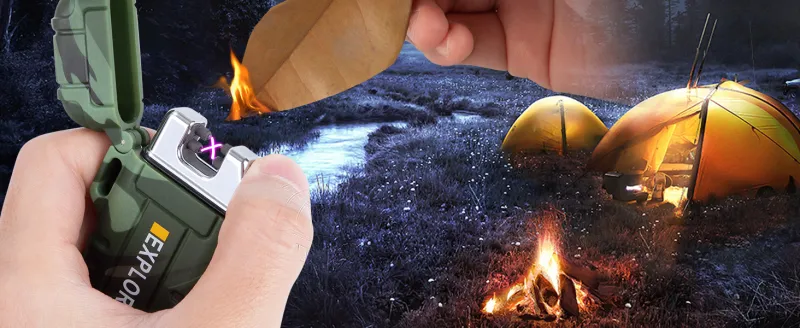
Photo: plasma arc lighter windproof outdoor weather test comparison, via m.media-amazon.com
Let me be upfront about something: I came into this with skepticism. The windproof and plasma lighter market has the slightly desperate energy of a product category trying too hard to justify its own existence. The packaging is aggressive. The claims are bold. And the prices — anywhere from $25 to well over $100 for some arc lighters — require a level of faith that I wasn't ready to extend without some evidence.
So we tested. Not in a controlled lab with perfectly calibrated equipment, but in the conditions that actually matter to drivers: a gusty ridgeline in the Appalachians, a rainy parking lot in the Pacific Northwest, a scorching rest stop in the Mojave, and an ordinary Tuesday commute in suburban Ohio. Real roads. Real weather. Real use.
Here's the honest breakdown.
What We're Actually Comparing
First, a quick taxonomy, because "windproof lighter" covers a lot of ground.
Torch/jet lighters use a pressurized butane flame that burns hot and focused — more resistant to wind than a soft-flame lighter by design, but still vulnerable in sustained gusts.
Windproof soft-flame lighters — think Zippo-style — use a wick-and-chimney system that's surprisingly resilient in moderate wind but can be extinguished in strong, direct blasts.
Plasma/arc lighters ditch combustion entirely. They use electrical current to create a high-temperature plasma arc between two electrodes. No fuel, no flame, just electricity — typically recharged via USB. They're marketed as waterproof, windproof, and altitude-proof because there's nothing to blow out.
Each technology is solving a slightly different problem, and understanding which problem you actually have matters more than the category label on the box.
The Wind Test
We set up at an exposed overlook in western North Carolina — consistent 25-35 mph gusts with occasional stronger bursts, which is genuinely unpleasant weather to be standing in. We ran three lighters through 20 ignition attempts each: a standard soft-flame refillable, a quality jet lighter, and a dual-arc plasma lighter.
The soft-flame lighter managed about 6 successful ignitions out of 20, and most of those required cupping and repositioning. In direct gusts, it simply didn't work.
The jet lighter performed considerably better — 16 out of 20 — though the flame was visibly stressed in the strongest gusts and failed to sustain long enough for practical use twice.
The plasma lighter? 20 for 20. Not dramatic. Not flashy. Just consistent. There's nothing to extinguish, so the wind becomes essentially irrelevant to the ignition itself. Where plasma falls short is in what you do with that arc — lighting something in sustained wind still requires shielding the material you're lighting, because the arc doesn't project heat the way a flame does.
That's a real limitation. But for ignition reliability in wind, plasma wins cleanly.
The Rain and Moisture Test
A wet afternoon in Oregon provided the next test environment. We weren't submerging anything — this was real-world rain exposure, the kind you get when you're at a campsite or a trailhead and the weather turns.
The soft-flame lighter absorbed moisture into the wick and became unreliable within about ten minutes of direct rain exposure. The jet lighter held up better — the sealed fuel system resisted moisture effectively, and it continued to ignite reliably as long as we could shield the flame briefly after ignition.
The plasma lighter was unfazed. Wet hands, rain on the body of the lighter, water on the electrodes — wipe it off and it fired. Some models are rated for brief water immersion. That's not marketing fiction. The electrical system is genuinely more moisture-resistant than any combustion-based design.
The Long Haul: Durability and Practicality
Here's where my opinion gets more complicated, and where I think the honest answer diverges from the enthusiast hype.
Plasma lighters require charging. That sounds trivial until you're three days into a backcountry trip, your USB bank is dead, and your lighter is a decorative paperweight. For drivers who are always near a power source — which, with a 12V socket in the cabin, is most of us — this is a non-issue. For anyone going genuinely off-grid, it's a real consideration.
The arc electrodes also wear out. Most plasma lighters are rated for somewhere between 300 and 1,000 charge cycles before electrode performance degrades. A quality butane lighter, properly maintained with clean fuel, can last decades. The math on long-term cost of ownership is not always in plasma's favor.
Torch lighters occupy an interesting middle ground. They're not as wind-immune as plasma, but they're refillable, repairable, don't need USB charging, and perform well in most conditions most drivers actually encounter. For everyday carry in a vehicle, a quality jet lighter with premium fuel is still a remarkably capable tool.
So Who Should Actually Buy What?
This is the question the marketing never quite answers directly, so let me try.
Buy a plasma lighter if: You regularly deal with sustained wind or heavy moisture, you have reliable access to USB charging (including your 12V socket), and you want ignition reliability as your absolute top priority. Overlanders, coastal drivers, and mountain-state adventurers will get genuine value here.
Buy a quality torch lighter if: You want a long-term tool that's refillable, repairable, and performs well in 90% of real-world conditions without the dependency on battery charge. This is the right answer for most drivers.
Keep a windproof Zippo-style lighter as backup: The wick-and-chimney design is remarkably resilient in moderate conditions and runs on fluid that's available at virtually every gas station in America. For a glove-box backup, it's hard to argue against.
The Verdict
Are windproof and plasma lighters worth the investment? For the right driver in the right conditions, genuinely yes. The technology isn't hype — it's solving a real problem, and it solves it well.
But "worth it" is a personal equation. If you're lighting a candle in your apartment and occasionally starting a campfire on calm evenings, you're buying a solution to a problem you don't have. If you're regularly driving into conditions where a standard lighter fails you, the premium is justified and then some.
Know your roads. Know your weather. Buy accordingly. That's the WindBlaze way.