Engraved, Altered, Owned: Inside the Lighter Customization Scene That Mirrors Car Culture
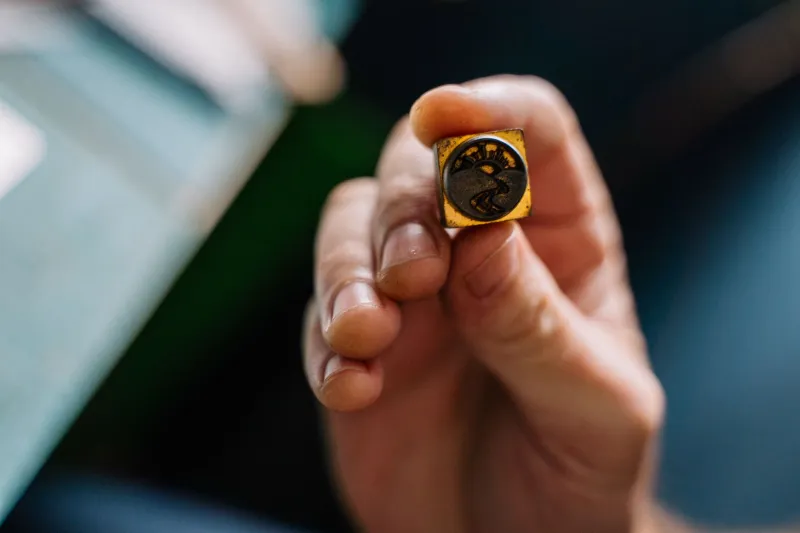
Derek Voss has been modifying cars since he was seventeen. He's done full frame-off restorations, built engines from bare blocks, and spent more weekends than he can count with his hands inside something that needed to be better than it was when he found it. These days, he also spends a fair amount of time at a small workbench in his garage with a set of engraving tools, a magnifying loupe, and a blank brass Zippo insert.
"It's the same impulse," he says, holding up a finished piece—a lighter with a hand-engraved relief of a 1969 Camaro's front end running across the case. "You start with something that's already good, and you make it yours."
Voss is part of a community that most people outside of car and craft circles have never heard of: lighter modders. These are enthusiasts who take premium refillable lighters—primarily Zippos, but also Japanese-made Imcos, vintage Rosonols, and high-end butane models—and transform them into one-of-a-kind personal objects through engraving, paint, inlay work, and mechanical modification.
The work is meticulous. The results are genuinely stunning. And the culture behind it is more deeply connected to automotive identity than you'd expect from something that fits in your shirt pocket.
The Blank Slate and What You Do With It
The appeal of the Zippo as a customization platform is hard to overstate. The case is a simple, flat-sided rectangle of steel or brass—a blank canvas that happens to be durable, iconic, and deeply embedded in American cultural history. It's been carried by soldiers, mechanics, long-haul truckers, and racers. It's appeared in more films and photographs than any other lighter ever made.
That history is part of why people want to put their own mark on it. Customizing a Zippo isn't just decorating an object. It's adding a chapter to something that already has a story.
For the modding community, the most common entry point is hand engraving—using a rotary tool, a graver, or traditional hand-push techniques to cut designs directly into the metal. The results range from simple monograms to elaborate automotive scenes: engine cross-sections, vintage race car profiles, highway landscapes, piston diagrams rendered with watchmaker-level precision.
Beyond engraving, modders explore surface treatments like acid etching, custom paint fills, and stippling. Some go further, modifying the mechanical internals—swapping flint wheels, reshaping windguards, or fitting custom inserts that alter the flame characteristics. A small but dedicated group fabricates entirely custom cases from raw brass stock, building a lighter from the ground up the same way a scratch-built hot rod starts from raw steel.
Where Car Culture and Lighter Culture Overlap
Listen to lighter modders talk about their work long enough and the automotive parallels become impossible to miss.
Jamie Reinholt, a custom engraver based outside of Denver who started as an automotive restoration painter, describes the mindset directly: "In restoration work, you're trying to bring something back to what it was, but better. In custom work, you're making something new that still respects what the original was. Lighter modding is exactly the same conversation."
Reinholt's portfolio includes a Zippo commissioned by a vintage racing team, engraved with the team's livery colors and the silhouette of their 1972 Trans-Am car. The piece took about twelve hours of work. It will never be sold. "That's the whole point," he says. "It's not inventory. It's an object."
This distinction—between a commodity and an object with identity—runs through both communities. The gearhead who spends a year on a rotisserie restoration isn't trying to produce a car. They're trying to produce their car. The lighter modder is doing the same thing at a different scale.
The Tools, the Time, and the Learning Curve
Getting into lighter modification doesn't require a machine shop, but it does require patience. Most beginners start with a Dremel and a cheap brass Zippo, practicing basic line work before moving on to more complex designs. Online communities—scattered across forums, Reddit, and Instagram—serve as both classroom and gallery, with experienced modders sharing technique breakdowns and beginners posting their first attempts for feedback.
The learning curve is real. Engraving on curved surfaces, managing depth consistency, and planning a composition that wraps around a case without losing proportion are skills that take time to develop. But the community is notably generous with knowledge, in the same way that old-school car clubs used to be—people who learned the hard way tend to want to save the next person some of that trouble.
For those who want to go deeper, formal engraving courses exist, and a number of established modders offer one-on-one instruction. Some have waiting lists measured in months.
What You're Really Carrying
There's something philosophically interesting about a lighter that's been customized by hand. Every time you use it, you're using something that required hours of human attention. The flame it produces is functionally identical to what any other lighter makes, but the object producing it is singular.
For drivers and gearheads, that singularity resonates. We live in an era of mass production and algorithmic sameness. The impulse to have something genuinely personal—something that reflects your history, your taste, your specific corner of car culture—is more powerful now than it's been in decades.
A hand-engraved lighter in your pocket is a small act of resistance against the disposable. It's the same reason someone spends a decade on a frame-off restoration instead of buying something off a dealer lot.
You could have the easy version. You chose the real one.
That says something. And in car culture, what your gear says about you has always mattered.