Unplugged on Purpose: Why the Best Road Trippers Are Going Back to Analog

Photo by Photo by Josh Porterfield on Unsplash on Unsplash
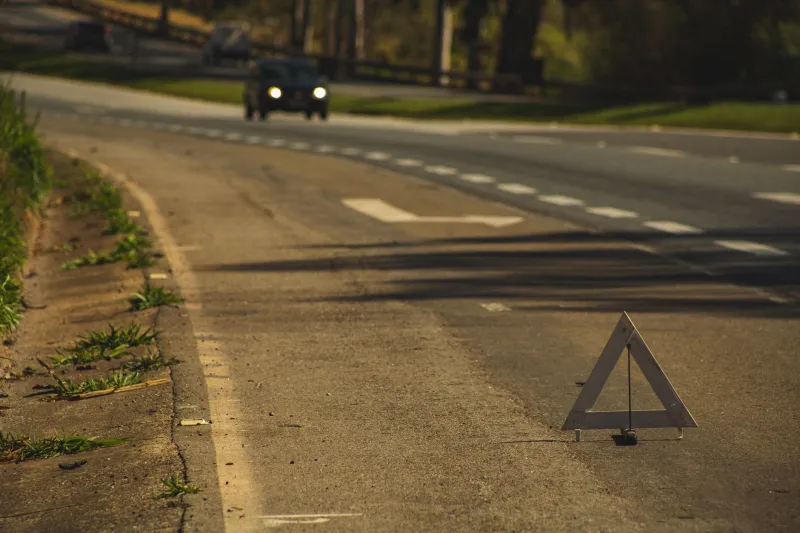
Somewhere on US-50 in Nevada — the Loneliest Road in America, according to the sign — Marcus Teller lost cell service for the fourth time in two hours. His phone mount showed a spinning wheel where the map used to be. His playlist cut out. His ETA disappeared.
He pulled over, reached into the center console, unfolded a paper map of Nevada he'd grabbed at a Flying J outside Salt Lake City, and figured out exactly where he was in about ninety seconds. Then he lit a cigarette with the butane lighter he keeps clipped to his visor, stared at the horizon for a moment, and got back on the road.
"That was the best part of the whole trip," he said later. "Not because the phone failed. Because I didn't need it."
Marcus isn't a Luddite. He's a network engineer from Denver who drives a late-model truck with every tech package the manufacturer offered. He chose the analog tools on purpose.
The Over-Digitized Cockpit Problem
American car culture has never been more connected — or more cluttered. The average new vehicle now ships with multiple screens, voice assistants, lane-keeping alerts, driver attention monitors, and enough notification sounds to make a hospital feel quiet. It's a lot.
And for a lot of drivers, it's too much. Not in a dramatic, throw-the-phone-out-the-window way. More in a low-grade, background-noise kind of way — the sense that the car is constantly managing you rather than the other way around.
There's actual psychology behind this feeling. Research on cognitive load — the mental effort required to process information — consistently shows that too many simultaneous inputs degrade decision-making and increase stress. On a long highway drive, every ping from the nav system, every Bluetooth handoff, every touchscreen prompt is a small withdrawal from your mental bank account.
Analog tools, by contrast, ask very little of you. A paper map doesn't update itself. A mechanical lighter doesn't pair with anything. A physical compass doesn't need a signal. They do one thing, they do it reliably, and then they get out of your way.
The Road Trip as a Ritual Space
Talk to serious road trippers — the kind who log 15,000 highway miles a year and have opinions about rest stops — and you start to hear a consistent theme. The best drives weren't the most efficient ones. They were the ones with texture.
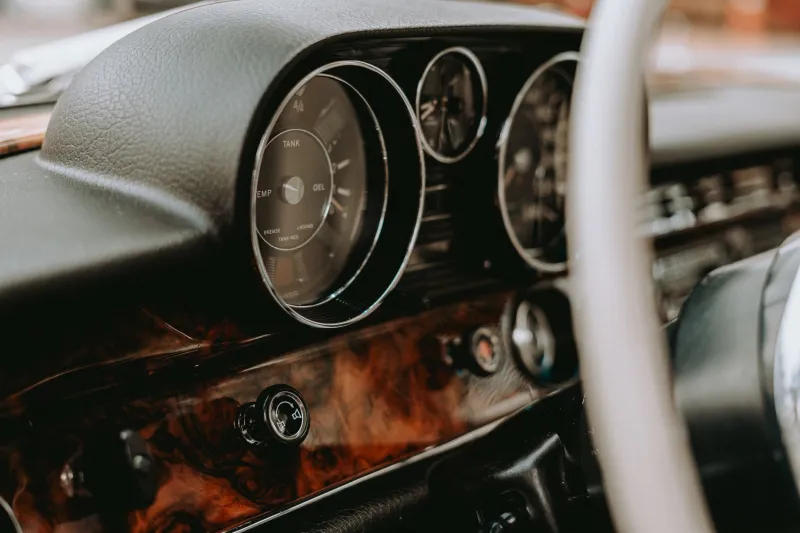
Texture means the scratch of a paper map. The click of a lighter. The weight of a real flashlight in the glovebox. The smell of a worn leather wallet pulled out at a cash-only diner. These sensory details accumulate into something that GPS coordinates and digital receipts simply cannot replicate: a feeling of presence.
"When everything is on a screen, the trip kind of flattens out," says Delia Foss, a travel writer based in Nashville who has documented road trips across all 48 contiguous states. "You're watching your location move on a map rather than actually moving through a place. The analog stuff pulls you back into your body."
Delia keeps what she calls a "road kit" in a canvas bag behind the driver's seat: a Rand McNally road atlas, a Zippo-style lighter, a small notebook, and a disposable camera. None of it is precious. All of it gets used.
The Lighter as a Road Trip Icon
Of all the analog tools making a quiet comeback in American road culture, the quality lighter might be the most loaded with meaning. It's practical — useful for campfires, emergency signaling, lighting candles at a motel when the power's sketchy. But it's also deeply symbolic.
The lighter has been a road companion since the golden age of American highway culture. It shows up in every great road narrative, from Kerouac to Hunter Thompson to the playlist of every country song about driving west until something changes. It's tactile in a way that almost nothing in a modern vehicle is. You feel it work. You hear it. You smell it.
For drivers who want to feel in their trip rather than managed through it, a well-made lighter is a small but meaningful anchor to that older, more physical version of the driving experience.
"There's something about having a flame," says road tripper and outdoor enthusiast Cal Briggs, who drives a lifted 4Runner and has crossed the country six times. "It's elemental. You made fire. You're not dependent on a charging cable or a battery. That feeling carries over into how you drive."
Why Tactile Tools Create Deeper Connections
The psychology here goes beyond nostalgia. Tactile interaction — touching, clicking, turning, striking — activates different cognitive pathways than screen-based interaction. Researchers studying human-computer interaction have found that physical tools tend to create stronger memory encoding and greater emotional attachment than their digital equivalents.
In plain terms: you remember the trip where you used the paper map. You forget the trip where Waze got you there.
This isn't an argument against technology. It's an argument for intentionality. The drivers who seem to get the most out of their road trips aren't the ones who go fully off-grid — they're the ones who make deliberate choices about which tools they reach for and why.
A quality lighter in the cupholder isn't a rejection of modernity. It's a declaration that some things are worth doing with your hands.
Building Your Own Analog Road Kit
If you're curious about dialing back the digital noise on your next drive, you don't have to overhaul anything. Start small. Swap one digital tool for a physical one and pay attention to how the drive feels different.
A few places to start:
- A real road atlas. The Rand McNally Road Atlas is updated annually and covers all 50 states. It doesn't need cell service and it never reroutes you onto a toll road without asking.
- A quality lighter. Not a gas station throwaway — something with weight and reliability. Keep it in a consistent spot so it becomes part of the ritual.
- A small notebook. For addresses, observations, and the kind of notes that don't belong in your phone.
- A physical watch. Glancing at your wrist is faster and less distracting than unlocking your phone.
None of this is about being contrarian. It's about building a driving experience that feels like yours — assembled by you, suited to your preferences, not default-configured by a product team in Silicon Valley.
The Road Is Still Out There
The highways haven't changed. The desert still stretches out the same way it did in 1968. The mountain passes are just as steep. The roadside diners are still there if you know to look.
What's changed is how much noise we bring with us. The drivers who seem to find the road most rewarding are the ones who've learned to manage that noise — to let the technology serve them rather than the other way around.
And sometimes, on a long empty stretch with no signal and no notifications, the most satisfying thing you can do is reach for something real.
Light it up. Drive on.