Not All Fuel Burns Equal: What's Really Inside Your Lighter Fluid
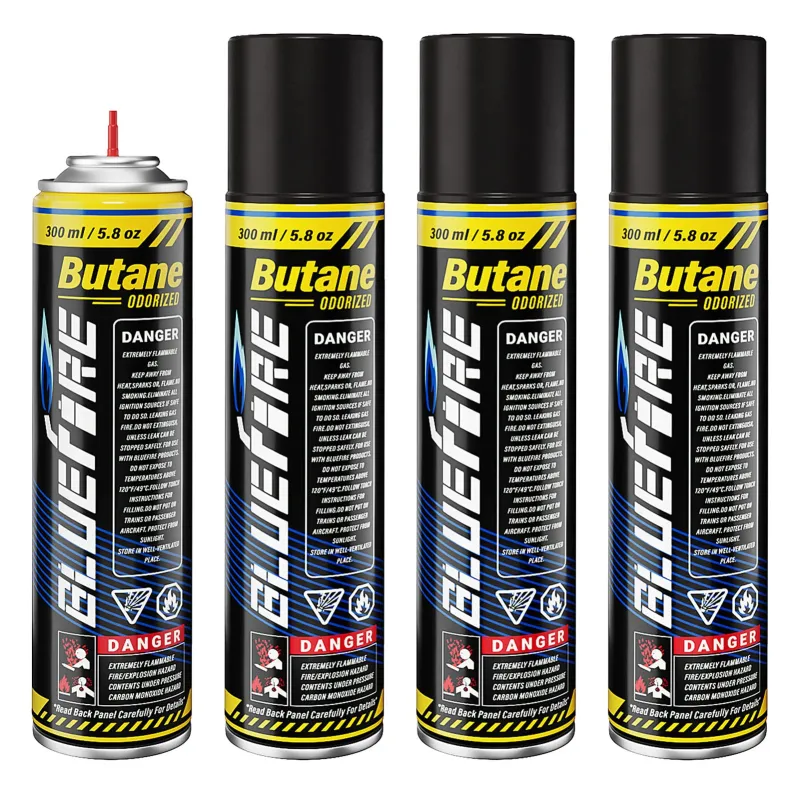
Photo: butane lighter fluid canister refill comparison chemistry lab, via bluefireusa.com
Most drivers don't think twice about lighter fluid. You run low, you grab whatever's on the shelf, you refill, you move on. It's the kind of purchase that feels too small to overthink.
Except here's the thing: if you've ever had a lighter sputter out at 8,000 feet in the Rockies, refuse to ignite in a humid Louisiana summer, or clog up after a winter road trip through Minnesota, the fuel you're running is almost certainly part of the problem. The chemistry inside that canister matters more than most people realize — and the gap between premium fuel and bargain-bin filler is wider than the price difference suggests.
We went deep on this one. Here's what you need to know.
The Basics: What Lighter Fuel Actually Is
Most modern refillable lighters — the kind worth owning — run on refined butane. At its core, butane is a hydrocarbon gas (C₄H₁₀, for the chemistry-inclined) that's stored as a liquid under pressure and vaporizes into a flammable gas when released. Simple enough.
But "butane" on a label is not a guarantee of quality. What separates a premium fuel from a grocery store product is the purity of the butane and what else is — or isn't — in the canister alongside it.
Budget fuels are often produced with lower refinement standards, meaning they carry higher concentrations of impurities: residual sulfur compounds, moisture, heavier hydrocarbons, and other contaminants that survive the refining process. These aren't just filler. They're active problems.
"Impurities are the enemy of a consistent flame," explains Dr. Carla Messing, an applied chemist who has consulted for specialty fuel manufacturers. "Even small concentrations of heavier contaminants will deposit residue on the valve seat and jet orifice over time. You get a flame that's inconsistent, a lighter that needs constant adjustment, and eventually a clog that renders the whole thing useless."
Premium butane — the kind marketed as triple-refined or higher — goes through additional purification stages that strip out those contaminants. The result is a fuel that's cleaner-burning, more consistent, and far less likely to gum up the precision mechanics of a quality lighter.
Altitude, Heat, and Humidity: Where the Difference Really Shows
For drivers who stick to the same climate year-round, the gap between fuel grades is real but manageable. For anyone who actually uses their vehicle to explore — and in the US, that's a lot of people — the performance spread becomes impossible to ignore.
High Altitude: Butane has a relatively high boiling point compared to some alternative fuels (like isobutane or propane). At elevation, where atmospheric pressure drops, lower-grade butane can struggle to vaporize efficiently. This is why your lighter might work fine in Denver but get sluggish at a trailhead in the San Juans. Premium fuels often blend in a percentage of isobutane — a structural isomer that performs better at altitude and in cold — to address exactly this issue. If you're regularly driving through mountain states, this matters.
Extreme Heat: At the other end of the spectrum, high ambient temperatures increase internal canister pressure. Cheap fuels with inconsistent composition can behave unpredictably under heat stress, leading to erratic flame height or pressure release issues. A well-refined fuel with consistent molecular composition handles thermal variation more predictably.
Humidity: This one surprises people. Moisture contamination in low-grade butane is a real issue — water and fuel don't mix well in a precision valve system. High-humidity environments like the Gulf Coast, Florida, and the Pacific Northwest can accelerate the problems that moisture-contaminated fuel creates. Premium fuels with tighter quality controls are far less likely to carry moisture into your lighter.
What the Testing Shows
We ran a comparative burn test across four fuel grades — ranging from a well-known grocery store brand to a triple-refined premium canister — using the same mid-range torch lighter under controlled conditions.
At sea level, 72°F, the differences were subtle but present. The premium fuel produced a cleaner, more stable flame with less visible byproduct. The budget fuel showed minor flickering and a slightly yellow-orange tinge at the flame base — a signature of incomplete combustion from heavier hydrocarbon impurities.
At simulated altitude (pressure adjusted to approximate 9,000 feet), the gap widened significantly. The two lowest-grade fuels struggled to maintain a consistent flame, with one failing to ignite reliably after several attempts. The premium fuel performed nearly identically to its sea-level behavior.
After extended use — roughly 200 ignitions per lighter — we disassembled each unit and inspected the valve and jet. The budget-fuel lighters showed visible carbon deposits and residue buildup. The premium-fuel lighter was notably cleaner.
Practical Recommendations by Region
Mountain West (Colorado, Utah, Wyoming, Montana): Prioritize a fuel that explicitly mentions isobutane blending. Cold starts and altitude performance are your main concerns.
Southwest (Arizona, Nevada, New Mexico): Heat stability matters most. Stick to reputable brands with consistent composition ratings. Avoid leaving fuel canisters in a hot car.
Gulf Coast and Southeast (Texas Gulf, Louisiana, Florida): Moisture resistance is your priority. Triple-refined fuel is worth the premium here — the cleaner the fuel, the less likely you are to introduce water contamination into your lighter's mechanics.
Pacific Northwest (Washington, Oregon): Similar to the Gulf Coast in terms of humidity concerns, with the added variable of frequent temperature swings. A quality all-weather blend handles both.
Great Plains and Midwest: Wind is your enemy more than chemistry — but clean fuel still helps your lighter perform reliably in cold winter conditions across the northern states.
The Bottom Line
The price difference between a budget butane and a premium triple-refined canister is usually a few dollars. The difference in what that fuel does to your lighter — and how reliably that lighter performs when you need it — is substantially larger.
If you've invested in a quality lighter, protect that investment with quality fuel. It's the simplest maintenance decision you can make, and it's one most drivers never think to make at all. Now you know better.