Flame Smart: The Lighter Safety Rules Most Drivers Have Never Heard
Let's be honest about something. Nobody hands you a safety briefing when you buy a lighter. There's no pamphlet in the glovebox, no warning label that covers the specific risks of using an open flame inside a moving vehicle. Most of us figure it out as we go, and most of the time that works out fine.
But "most of the time" isn't the same as "safely." There's a gap between casual lighter use and genuinely responsible lighter use, and it's wider than most enthusiasts realize. This guide is about closing that gap — not with fear-mongering, but with practical, actionable knowledge that makes every drive safer.
The Fuel Door Proximity Problem
One of the most commonly overlooked hazards involves where you're standing when you use a lighter outside the vehicle. If you've ever pulled over at a rest stop, stepped out to stretch, and sparked up within a few feet of your fuel door, you've taken a risk you probably didn't fully appreciate.
Modern fuel systems are sealed well enough that casual proximity isn't usually a disaster waiting to happen. But "usually" does a lot of heavy lifting in that sentence. Older vehicles, vehicles with damaged fuel caps, or any car that's just come off a long stretch in summer heat can have trace fuel vapors around the fuel door area. Gasoline vapor is heavier than air — it settles low and lingers.
The practical rule is straightforward: maintain at least 15 to 20 feet of distance from your fuel door, fuel cap, or any visible fuel component when using an open flame. If you've recently fueled up, extend that buffer and give it a few minutes before lighting anything. This isn't paranoia — it's the same guidance that fire safety professionals apply to any environment where fuel vapor is a realistic possibility.
Storage Habits That Create Real Risk
How and where you store your lighters inside the vehicle matters more than most people think. The two most common mistakes are leaving butane lighters in direct sunlight on the dashboard and storing lighters loose in a space where they can roll against hot surfaces or get compressed under other objects.
A butane lighter left on a dashboard in direct summer sun in states like Texas, Arizona, or Florida can reach internal temperatures that stress the fuel seal. In worst-case scenarios involving poorly manufactured budget lighters, this can lead to slow leaks that create a low-level fuel vapor presence inside the cabin. That's not a good situation when you go to use a flame later.
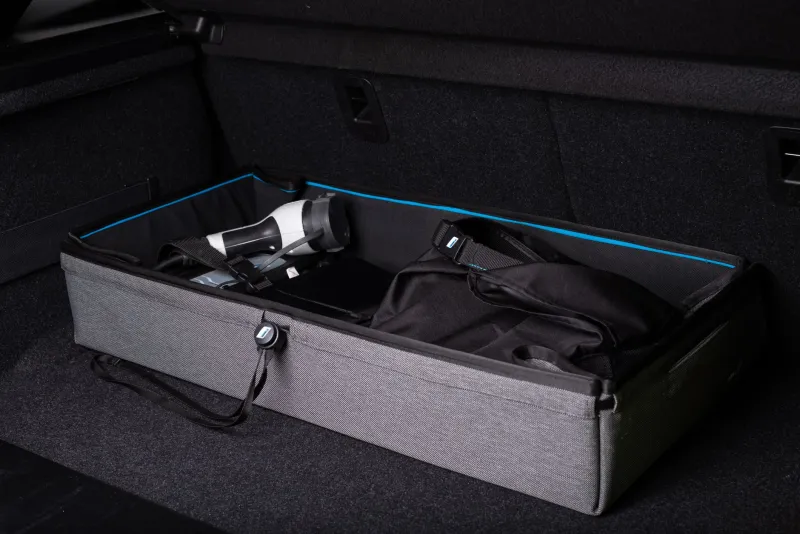
The right storage approach is simple: keep lighters in the center console, glovebox, or a dedicated pouch in a door pocket. Away from direct heat, away from surfaces that get hot, and in a position where they won't be crushed or compressed. For collectors carrying multiple pieces, a small hard-sided case is worth every penny — it protects the lighters and keeps them consolidated in a safe, predictable location.
Inside the Cabin: Ventilation Is Not Optional
Using any open flame inside a vehicle cabin requires adequate ventilation. This sounds obvious until you're sitting in a car on a cold night with the windows up, and it stops feeling obvious pretty quickly.
Carbon monoxide is the primary concern with any combustion inside an enclosed space, but incomplete butane combustion also produces carbon dioxide and trace compounds that accumulate faster in a sealed cabin than most people expect. The simple fix: crack a window. Even an inch or two of airflow is enough to prevent buildup during brief use.
If you're using a torch-style lighter for any extended purpose — lighting a cigar, for example, which takes a sustained flame — the ventilation requirement increases. Torch lighters burn hotter and consume more fuel per second, meaning more combustion byproducts in a shorter time. Two windows cracked, even partially, creates enough cross-ventilation to manage this safely.
Passenger Side Awareness
This one comes up less often but matters significantly: be aware of what's in the immediate environment when you spark a lighter in a moving vehicle. Loose papers, fast food bags, fabric seat covers, and hanging air fresheners are all ignition risks in the wrong circumstances.
The issue isn't that your lighter is going to spontaneously ignite your car — it's that a moment of inattention while managing a flame can result in contact with a flammable material before you've registered what's happening. Experienced drivers develop a quick spatial awareness habit: before sparking, a fast visual check of the immediate area. It takes half a second and it's a genuinely useful reflex.
Highway patrol officers who deal with vehicle fire investigations note that interior fires from lighter use are rare but follow consistent patterns — usually a combination of a flammable material in close proximity and a distracted driver. The distraction element is often the critical factor. Lighting anything while actively navigating traffic is a compounding risk. Pull over when you can. It's the easier call than it sounds.
Accidental Ignition in Storage: The Risk Nobody Talks About
One of the more underappreciated risks in the enthusiast community involves lighters stored in bags, backpacks, or gear pouches that get tossed into the backseat or cargo area. A lighter with a worn or absent child-safety mechanism can spark if the ignition wheel gets compressed against another object.
This risk is low in isolation, but it scales with how many lighters you're carrying and how casually they're stored. A collector with a dozen pieces rattling around in an unstructured bag has created a situation where repeated mechanical contact is inevitable over the course of a long drive.
The solution is individual storage — each lighter in its own sleeve, pouch, or dedicated slot. This protects the lighters from mechanical wear and eliminates the accidental compression risk entirely. It's a habit that serious collectors already follow for preservation reasons, and it doubles as a meaningful safety practice.
Building the Right Habits
None of this is complicated. The safety practices around lighter use in vehicles are genuinely simple once you know them — and that's exactly why it's worth taking ten minutes to internalize them. The gap between casual use and responsible use isn't a wide one. It's mostly just awareness.
Keep your storage smart, maintain distance from fuel systems, ventilate your cabin, stay spatially aware inside the vehicle, and protect your collection from accidental compression. Do those five things consistently and you've covered the vast majority of the risk profile that most drivers never think about.
The road is already full of variables you can't control. Your lighter habits shouldn't be one of them.